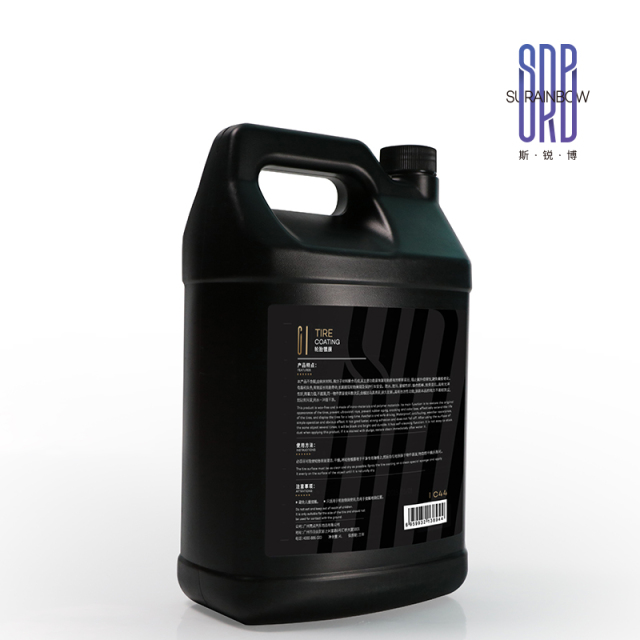
Product Overview
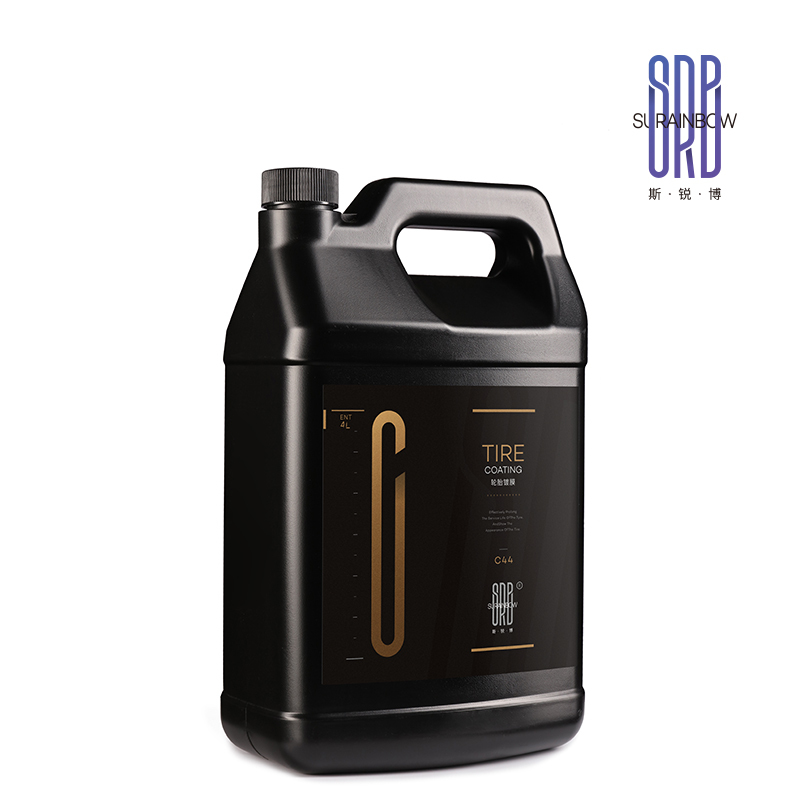
It is a working size — the pack a bay reaches for every day rather than a single-vehicle bottle — and it is the format detailing studios, dealership prep departments and distributors tend to standardise on. The job is simple to describe: it brings a sidewall back to a deep black gloss and keeps it there. A conventional tire shine can look right for a day and then fade into a dusty film; this one is built to hold its appearance between services. In a workshop it is the last step of a wash and wheel service, once the rims are clean and the sidewall is dry. Distributors stock it at the professional end of a wholesale tire shine range, alongside the consumer bottles and the rest of the car care catalogue.
Formula & Film Behaviour
Most dressings on the market are variations on wax, silicone or oil. Sold as a tire polish, they rely on a glossy layer that sits on top of the rubber: it looks right for a day or two, collects dust in the yard, browns at the shoulder and slowly washes away. On a driven car it also ends up on the paint behind the wheel.
SRB Tire Coating takes a different route. The formula is wax-free and built from nano and polymer materials that bond to the rubber instead of sitting on it. Once the carrier has gone, what is left is a thin, waterproof film that behaves like part of the sidewall — rain does not reset it to grey, and a normal wash does not strip it.
That film is self-cleaning. Dust does not cling to it the way it clings to a greasy dressing, and when a vehicle picks up mud from a site road or a wet field, a flush of water takes the mud with it and the gloss comes back. For a fleet or a rental yard, that is the difference between a wash and a re-dress.
Weather resistance is the other half of the job. Ultraviolet light dries the rubber, pulls the black out of it and starts the fine surface cracking that eventually becomes a perished sidewall. The coating screens the surface and slows that cycle, which is why it is worth using on tires that sit outside all year.
One thing to keep clear: this is a product for rubber. If your workshop also sells a ceramic coating for wheels, the two sit side by side in a wheel-off service — one protects the rim, this one dresses the tire — but they are different chemistries applied to different surfaces, and neither replaces the other.
- Deep black gloss. The film lays down an even, high-gloss black that reads as new rubber rather than dressed rubber — wet-looking, without the oily sheen a solvent product leaves behind.
Strong adhesion, no sling. The coating grips the sidewall and does not fall off, so the paint and bodywork behind the wheel stay clean once the car is on the road.
UV protection. Sunlight is what fades, hardens and cracks a sidewall; the coating screens the rubber and helps it keep its condition through a long, hot season.
Restores the original appearance. Tires that have gone grey and tired come back to a deep, even black instead of the washed-out tone they settle into after a few months.
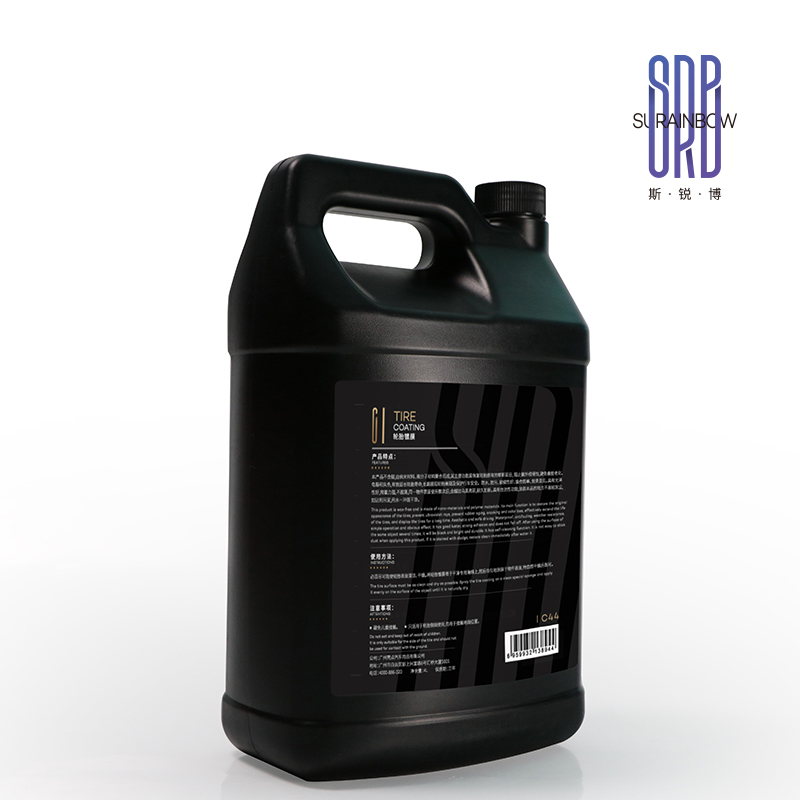
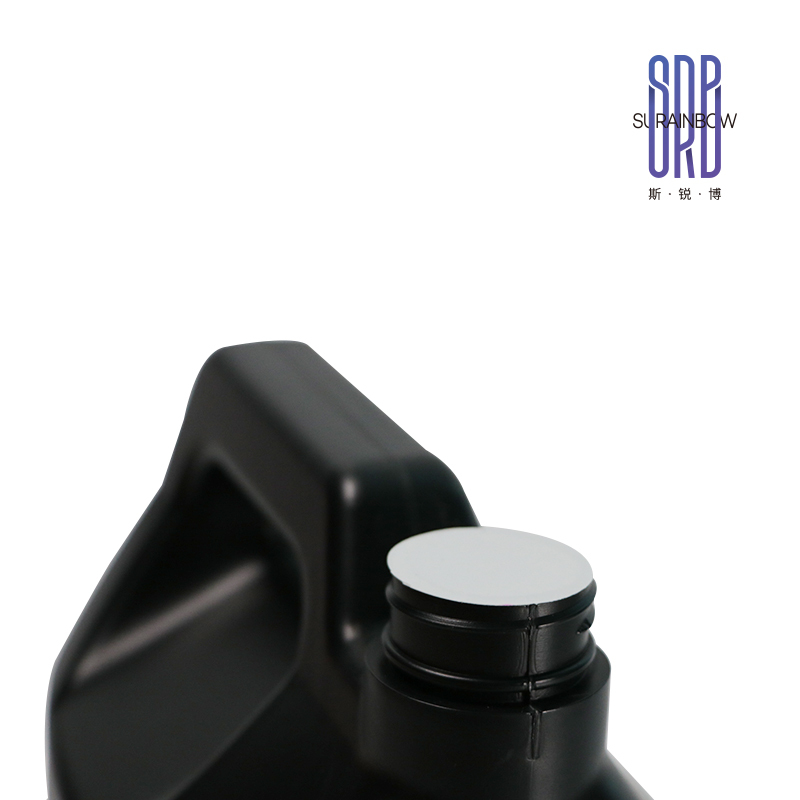
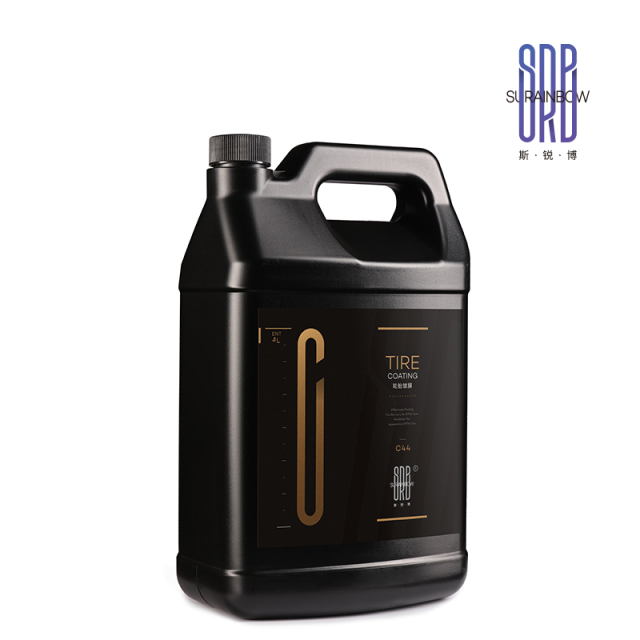
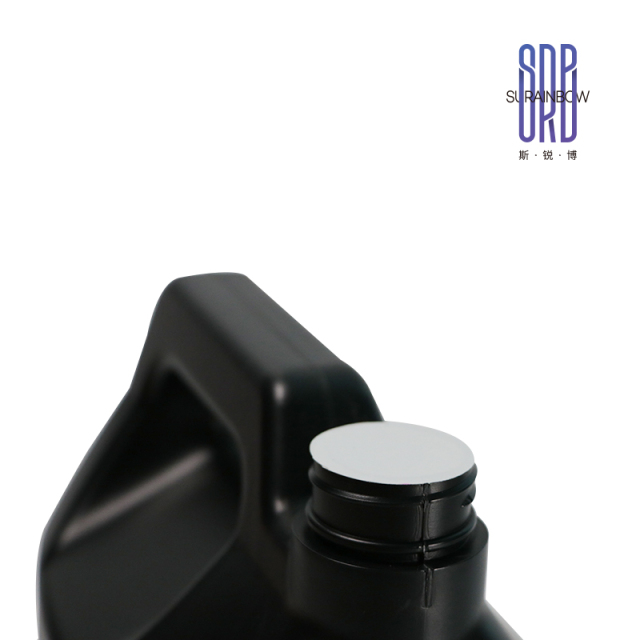
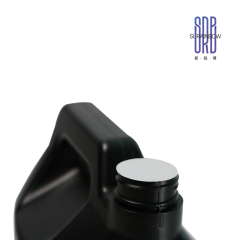
Wax-free formula. Nothing builds up on the rubber and nothing browns in the sun, and there is no greasy layer for dust to settle into — the usual complaint about a wax-based tire shine. - 4 L professional pack. One jug keeps a busy bay supplied, with an integrated handle and a screw cap that closes cleanly between vehicles.
Workshop Applications
- Detailing studios. The final dress after a wash, decontamination and wheel clean, when the car has to leave with a crisp black sidewall and nothing oily on the paint.
- Dealership, rental and fleet prep. Volume work where a consistent finish matters more than a boutique product; the dry film does not collect dust while the car waits in the yard.
- Tire bays and quick-fit shops. An easy addition to a tire sale — clean, dry, wipe on, and the wheel goes back on the car looking finished.
- Shops that have outgrown a tire polish. Teams moving off wax and oil dressings want a finish that survives a wash, does not brown and does not need redoing on every car.
- Fleet yards and truck workshops. Vans, light trucks and semi-truck tires carry long sidewalls and high mileage, and adhesion decides whether the dressing is still there at the end of the week. It is also a common line for buyers who look after haulage yards as their semi-truck tire shine supplier, since one pack covers the whole fleet.
Application Steps
- Start with a clean tire. Wash the sidewall and rinse away road film, brake dust and any old dressing; if the rubber has been dressed with a wax or silicone product before, work a degreaser around the shoulder and rinse again so the new coating has bare rubber to bond to.
- Dry the sidewall completely. The coating bonds to dry rubber, and a damp tire leaves a patchy, streaky finish that never settles evenly.
- Pour a small amount onto a foam applicator or a folded sponge, or into a shallow tray for dipping. A soaked applicator wastes product and lays the coat on too thick.
- Work the product around the sidewall in a thin, even coat, keeping it off the tread blocks and away from brake components and brake lines.
- Check the shoulder and the lettering as you go and even out any heavy patches before they begin to set; the goal is one consistent film from bead to shoulder.
- Wipe any overspill off the rim or paint while it is still wet, taking care not to disturb a ceramic coating for wheels, then let the tire dry fully before the vehicle goes back on the road.
- Top up when the gloss dulls. A maintenance coat of this tire shine on a clean, dry sidewall takes a fraction of the time of the first application.
Specifications
| Property | Detail |
|---|
| Product | Wax-free tire coating, 4 L |
| Item number | C44 |
| Pack size | 4 L |
| Container | Black plastic jug with integrated carry handle and screw cap |
| Formula base | Nano and polymer materials, wax-free |
| Finish | High gloss, deep black |
| Water resistance | Waterproof |
| Weather resistance | Yes |
| UV protection | Yes — helps prevent fading, cracking and hardening |
| Self-cleaning | Yes — mud rinses off with water |
| Application surface | Tire sidewalls |
| Application method | Wipe on with an applicator or sponge, then wipe off excess |
| Typical users | Detailing studios, dealership and fleet prep, distributors |
| Pack supply | Standard packs held in stock for wholesale tire shine orders |
Ordering & Delivery
- Product brief and quotation. Tell us the market you sell into, the pack and label you want, and which documents your importer will ask for, along with what you need from a tire shine supplier in terms of stock and replenishment. The quotation comes back with the MOQ, lead time and pricing that apply to that scope.
- Sampling, testing and sample confirmation. Ask your sales contact about sample availability for the exact product. Test it on the sidewall you actually dress, in the conditions your customers use it in, note how it is applied and how the finish reads on the rubber, then seal the approved sample as the reference for the bulk order. Sample scope and any courier arrangements are confirmed before dispatch.
- Packaging design, proofing and confirmation. Container, label artwork, carton and shipping marks are agreed and proofed before production, whether you take the standard SURAINBOW pack or your own label. The approved proof becomes the packing reference the bulk run is checked against.
- Balance, shipment and document handover. Before dispatch we confirm the inspection arrangement, balance payment status, shipping method, consignee details and carton marks. Export documents such as the safety data sheet, certificate of analysis, GHS label information, commercial invoice, packing list and customs paperwork are prepared according to the destination market — confirm the set that applies to your shipment, since local labeling and registration obligations sit with the importer. Standard packs are kept in stock and fast shipping is arranged on stock orders.
- After-sales and batch traceability. Each batch carries a record and a retained sample. If a delivery arrives leaking, short or off-spec, send the batch number, the affected quantity, photos and a written description of how the product was stored and used, so it can be checked against the approved reference and the cause traced.
Scale & Supply Capability
SURAINBOW is run by Guangzhou Liangdian Automotive Supplies Co., Ltd., a factory-trade operation set up in Guangzhou in 2010 and now 50 people strong. Sixteen years in car care have given us a one-stop supply position: our own SURAINBOW lines are held in stock for fast shipping, and an associate factory with modern production equipment and an established quality management system keeps replenishment moving. We take OEM and ODM work and our R&D team develops to your specification. Buyers in the Middle East, the United States, Southeast Asia, Europe, the UK, Russia, Africa and Australia already order from us.
FAQ
What finish does the tire coating leave?
A deep black, high-gloss finish that looks like new rubber rather than a wet dressing. The gloss level follows how thickly it is applied: a thin, even coat gives a clean factory-style black, and a second coat on a dull sidewall deepens the look. Because it forms a coating film rather than a tire polish that sits on the surface, the gloss does not smear when it is touched.
Can it be used on van, light-truck and semi-truck tires?
Yes. Passenger-car, van, light-truck and semi-truck sidewalls take the same product and the same method; a tall sidewall simply takes more product and is easier to work in sections so the coat stays even from shoulder to shoulder. It is also a common line for buyers serving haulage yards as their semi-truck tire shine supplier, because one pack covers the whole fleet.
What if the sidewall is already cracked or badly perished?
The coating restores color and screens the rubber from further UV, which slows the process, but it cannot rebuild rubber that has already cracked or split. On a tire with deep cracks, treat it as appearance care rather than a repair and check the result on a sample before committing a whole fleet. Sidewalls that are merely grey and dry usually change immediately.
Does it need machine application?
No. It is a hand-applied product — an applicator pad or sponge, a clean dry sidewall and a few minutes per wheel. That makes it practical in a mobile unit or a dealership prep bay where no machine is on hand, and it keeps overspray away from paint, glass and brakes.
Can it be used on rims, trim or painted surfaces?
It is formulated for tire rubber, so the sidewall is the place for it. Wheel rims, rubber and plastic trim and painted panels are separate jobs that each need their own product; if the rims are being protected, a ceramic coating for wheels is the right choice there. Keep the coat on the sidewall and off the tread blocks and brake components.