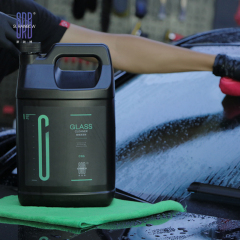
Soils It Lifts
- Traffic film — the thin grey-brown layer that builds up behind other vehicles and turns into a smear the moment a wiper crosses it. It is the soil this formula was designed around, and it is where an auto glass cleaner traffic film job differs most from wiping a window at home.
- Insect splatter — protein-rich and stubborn once dried.
- Sludge and mud — thrown up from wet roads and baked onto the lower screen, the wiper park area and the mirror caps.
- Asphalt and tar specks — small black dots along the sills and the bottom edge of the screen that smear badly if you attack them dry.
- Salt and winter residue — the pale drying rings left behind by gritted roads and by rinse water that evaporated in the sun.
- Tree sap — the sticky spots that land under trees and hold dust until they are softened and lifted.
- Hand oil and tobacco tar — the fingerprint haze and yellow-brown build-up on the inside of the screen, worst on the passenger side and around the mirror.
- Plastic volatiles — the plasticiser fog that condenses on interior glass over months, and the reason a screen can look dirty in a car that is cleaned every week.
- Dust and light road grime — the easy half of the job, and the reason a weak mix is usually enough for a weekly upkeep wipe. A household glass cleaner lifts dust and little else. It has no route into sludge or grease, which is why a screen cleaned with one smears the first time it rains.
Product Overview
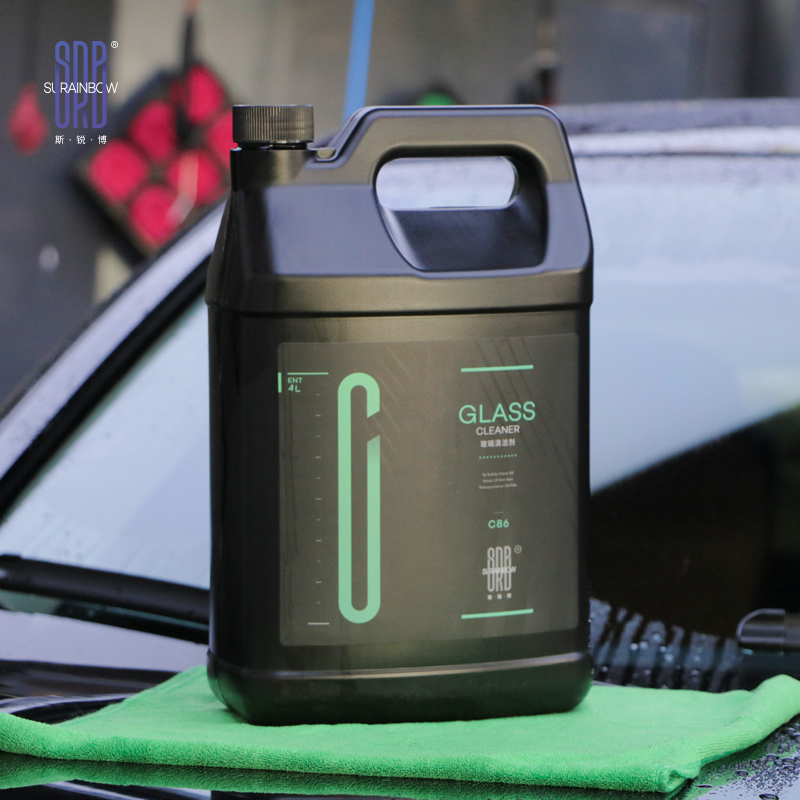
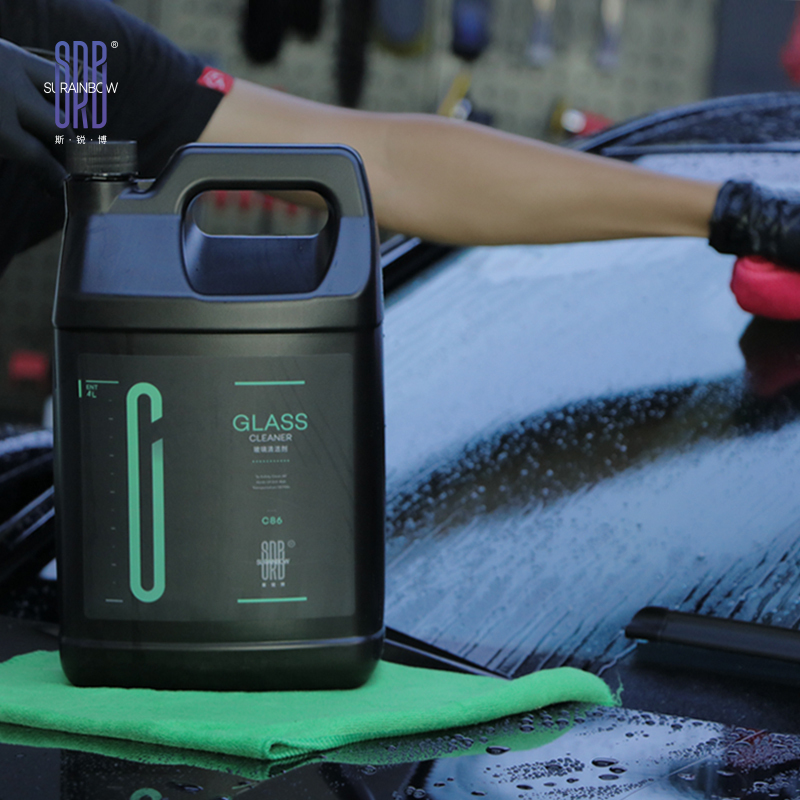
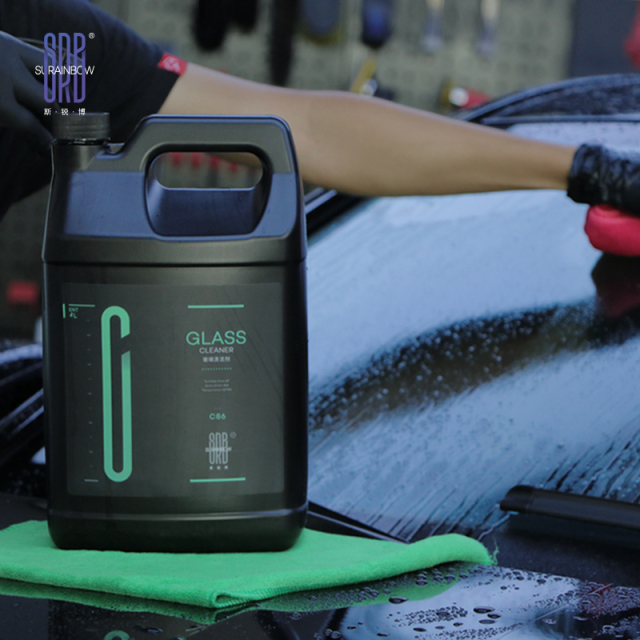
SRB Auto Glass Cleaner is a car glass cleaner concentrate for windscreens, side windows and rear screens: mix it with water, spray it on, work it over the glass and wipe it dry. It comes from an auto glass cleaner manufacturer, so it is built for the soils a car picks up in traffic rather than the dust on a living-room window, and it dries down to a clear pane with nothing left behind. Mixing happens on site, so the car window cleaner dilution follows the soil in front of you instead of a factory-set bottle. Weekly upkeep on lightly dusty glass sits at one end of the range and a greasy winter screen or an insect-heavy motorway front sits at the other, and the same container covers both without a second product on the shelf.
Film-Safe Formulation
There is no ammonia in the formula and no harsh surfactant load. On a modern car the inside of the screen is usually covered with a factory or aftermarket film, and an aggressive cleaner will cloud it, dull it or lift an edge over months of routine use. Building it as an ammonia free auto glass cleaner means the same bottle can go on the outside of the screen and on the filmed inside without swapping to a second, milder product mid-job.
Tinted glass gets the same treatment. A tinted window glass cleaner has to be judged on what it leaves behind, not only on what it lifts, because film on a tinted side window shows haze, streak lines and colour shift very clearly. The ultra-transparent formula is there so the glass reads clear afterwards rather than merely wiped, and on a dark interior in daylight that difference is the first thing a customer notices.
Convenience is part of the design. One container and one spray bottle cover the front screen, the side glass, the mirrors and the inside of the rear screen, and nothing needs rinsing off. That matters most on interior glass, where a puddle running down into a door card or an electric seat switch turns a five-minute job into a repair.
Dilution & Application Method
- Set the car window cleaner dilution. One part cleaner to between three and ten parts water. Light dust and a weekly wipe-down sit at the weak end; greasy film, insect-heavy fronts and winter salt sit at the strong end. Write the mix on the bottle, because the next person to pick it up will not know what is in it.
- Mix in a clean spray bottle, water first. Add the water, then the cleaner, then cap and invert gently. Shaking a concentrated surfactant mix into foam wastes product and makes the first sprays uneven.
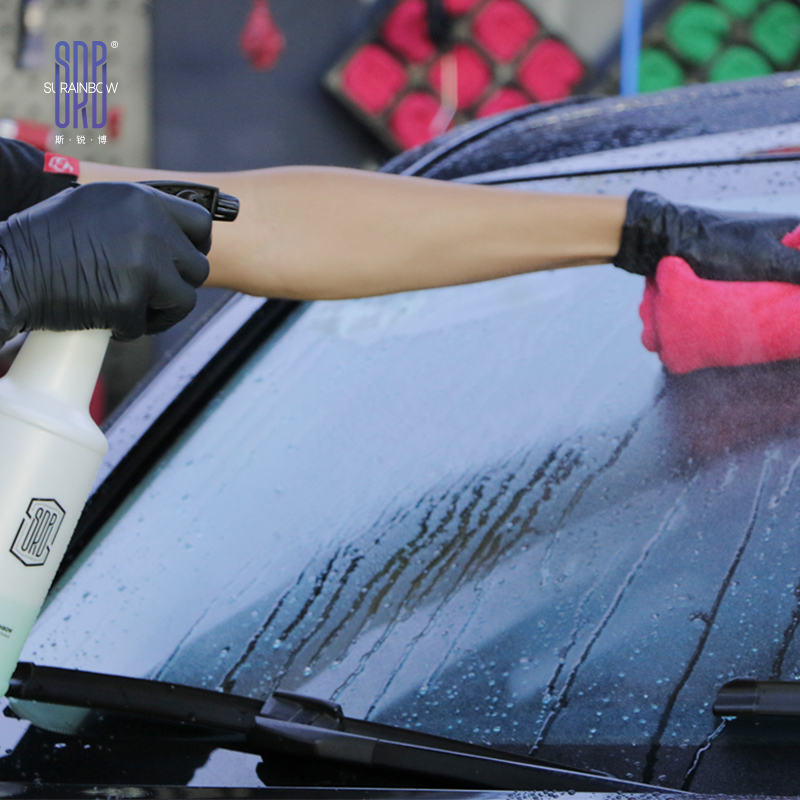
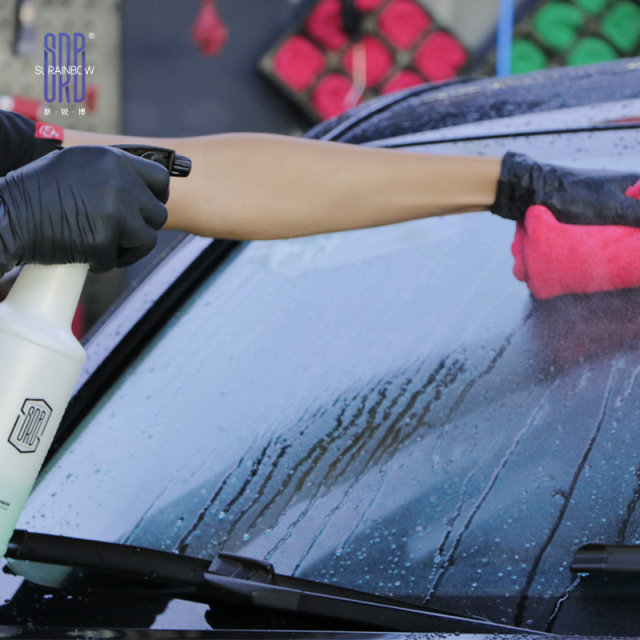
- Mist the outside of the screen from the top down. Work the upper half first so anything that runs carries soil away from the glass rather than back across it, and keep the spray off bare rubber trim and paint wherever you can.
- Agitate the stubborn zones. The wiper park area, the screen edges and the corners hold the heaviest auto glass cleaner traffic film, and the top edge of the interior screen near the mirror collects plasticiser fog. Give those areas a second mist and a light scrub with a microfiber or a soft glass pad.
- Wipe with a dry cloth, not a wet one. Fold a clean microfiber into quarters and wipe in overlapping passes, turning to a fresh face as it loads up. A wet cloth pushes soil around instead of picking it up.
- Do the inside with a lighter hand. Mist the cloth rather than the glass so nothing runs down into the dashboard or the door electrics, and work outward from the centre of the screen.
- Buff in raking light. One final dry pass at a low angle shows up anything missed before the car leaves the bay.
Applications & Buyers
- Wash bays and tunnel exits — the last glass pass before a car goes back to its owner, done with a bottle and a cloth rather than a machine.
- Detailing studios — the interior-glass step after polishing, when compound dust settles on the inside of the screen and shows under inspection lights.
- Dealership and fleet preparation — high volume, low-skill work where one ratio card and a stack of cloths is the whole setup.
- Mobile detailers — a concentrate travels light: one container and a spray bottle replace a case of ready-mixed bottles in the van.
- Distributors and wholesalers — buyers looking for a wholesale car glass cleaner to slot into an existing line next to shampoo, degreaser and interior cleaner.
- Own-brand ranges — brands that want their own label on a proven formula; this is where we work as an auto glass cleaner supplier rather than only as a house brand. For screens carrying a heavy, baked-on oil layer, this is the routine cleaner rather than the stripper; tell us what you are seeing on the glass and we will point you to the right step in the range.
Specifications
| Product name | SRB Auto Glass Cleaner |
| Product code | No.C86 |
| Form | Concentrated liquid, diluted with water before use |
| Dilution ratio | 1:3 to 1:10 (cleaner to water) |
| Ammonia | Not used in the formula — an ammonia free auto glass cleaner rather than a low-ammonia one |
| Surfactants | No harmful surfactants; the mix flashes clear without residue |
| Interior glass film | Safe when used as directed |
| Tinted glass | Can be used as a tinted window glass cleaner on filmed and factory-tinted side windows |
| Soils targeted | Dust, insects, sludge, asphalt, salt, tree sap, hand oil, plastic volatiles |
| Finish after wiping | Clear and transparent; the glass reads as clean as the liquid itself |
| Application | Spray on, agitate, wipe dry with a microfiber cloth |
| Pack format | Confirmed per order |
Ordering & Delivery
- Send the brief. Product, destination market, pack format and the volume you are planning.
- Sample, test and approve. Test the mix on your own water and your own screens before committing to volume. Once a sample is approved it is sealed and becomes the reference every bulk batch is checked against.
- Settle the pack. The wholesale car glass cleaner you order is filled into the container you specify, with label artwork, closure, carton and shipping marks proofed and signed off before production starts.
- Confirm the terms. Minimum order quantity, price, Incoterm and lead time are fixed in the quotation. In stock and fast shipping applies to standard lines; custom packs move onto a production schedule. As an auto glass cleaner manufacturer we quote from our own production, so a change of pack or volume is costed before it is promised.
- Balance, dispatch and documents. The balance settles before dispatch, we book the shipment against the agreed Incoterm, and the document set travels with the goods.
- Documents for your market. Safety data sheet, certificate of analysis, GHS label information, commercial invoice, packing list and customs papers. Confirm at quotation stage which of these your market requires, and whether label language or hazard wording needs review before artwork is finalised.
- After-sales and batch traceability. Every batch is recorded, so a question is answered from the order reference, the batch number, the quantity affected and photographs of what you are seeing. Report leaks, shortages or quality concerns as soon as the shipment lands so they can be checked against the retained sample.
Scale & Supply Capability
SURAINBOW is run by Guangzhou Liangdian Automotive Supplies Co., Ltd., an auto glass cleaner manufacturer and factory-trade operation set up in Guangzhou in 2010 and now 50 people strong. Sixteen years in car care have given us a one-stop supply position: our own SURAINBOW lines are held in stock for fast shipping, and an associate factory with modern production equipment and an established quality management system keeps replenishment moving. We take OEM and ODM work and our R&D team develops to your specification. Buyers in the Middle East, the United States, Southeast Asia, Europe, the UK, Russia, Africa and Australia already order from us.
FAQ
Should I mix it strong or weak?
Start weak. The car window cleaner dilution runs from 1:3 to 1:10, and most weekly upkeep is comfortable at the weak end — one part cleaner to ten parts water. Move toward 1:3 for a screen that is greasy, bug-heavy or caked in winter salt, then drop back once the car is clean. Mixing stronger than the job needs does not clean faster; it costs more per car and leaves more to wipe off.
Is it safe on aftermarket window film and factory tint?
Yes, when it is used as directed. The formula is built without ammonia and without a harsh surfactant load, so it can go on the filmed inside of a screen as well as the outside. Used as a tinted window glass cleaner it lifts hand oil and plasticiser fog without clouding the film. Keep it away from cut film edges where you can, and wipe with a cloth rather than a scraper.
Will it remove water spots that have been on the glass for months?
Fresh mineral residue and light spotting lift with the cleaner during a normal wash. Spots that have sat on the glass and etched into it are a different problem, because the glass surface itself has changed, and no spray cleaner brings that back — it needs a polishing step with a glass disc. If a screen stays hazy after a clean, tell your sales contact what you are seeing and we will point you to the right process.
Can I put it in the car's washer bottle?
It is designed for spray-and-wipe use, but the same car glass cleaner concentrate can be diluted into the same 1:3 to 1:10 range for a washer bottle. Test it on one vehicle first: washer systems differ in pump, jet size and how long the fluid sits between fills. For fleet use, confirm the routine with our team before changing it across a whole depot.
The film comes back a week after I clean the screen — why?
That is usually the wiper and the cabin air, not the cleaner. An auto glass cleaner traffic film job removes what has built up on the glass, but worn wiper blades or a clogged cabin filter put the layer straight back. Clean the screen, clean or replace the blades and check the filter, and the glass stays clear far longer.
Why does the formula avoid ammonia?
Because the inside of a modern windscreen is usually filmed, and ammonia is hard on film over time. Building it as an ammonia free auto glass cleaner means one bottle covers the outside of the screen and the filmed inside without a separate, milder product — and without the sharp smell that wears down staff working inside a closed cabin all day.