Product Overview
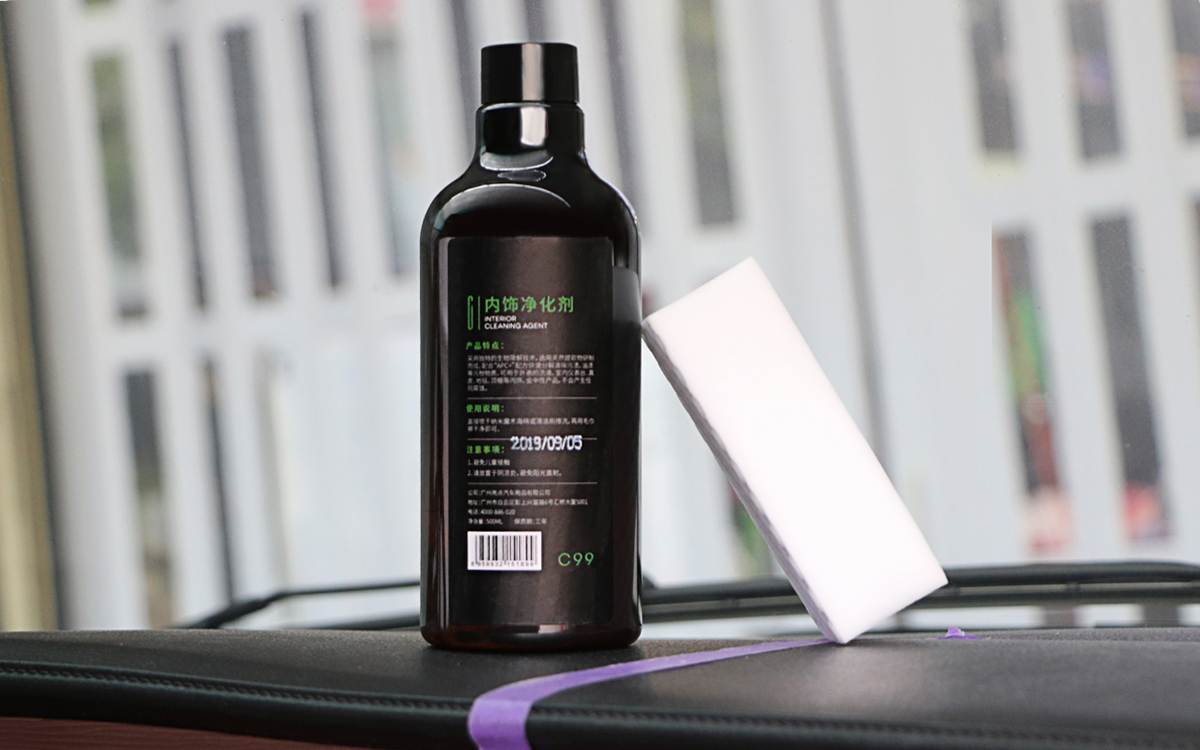
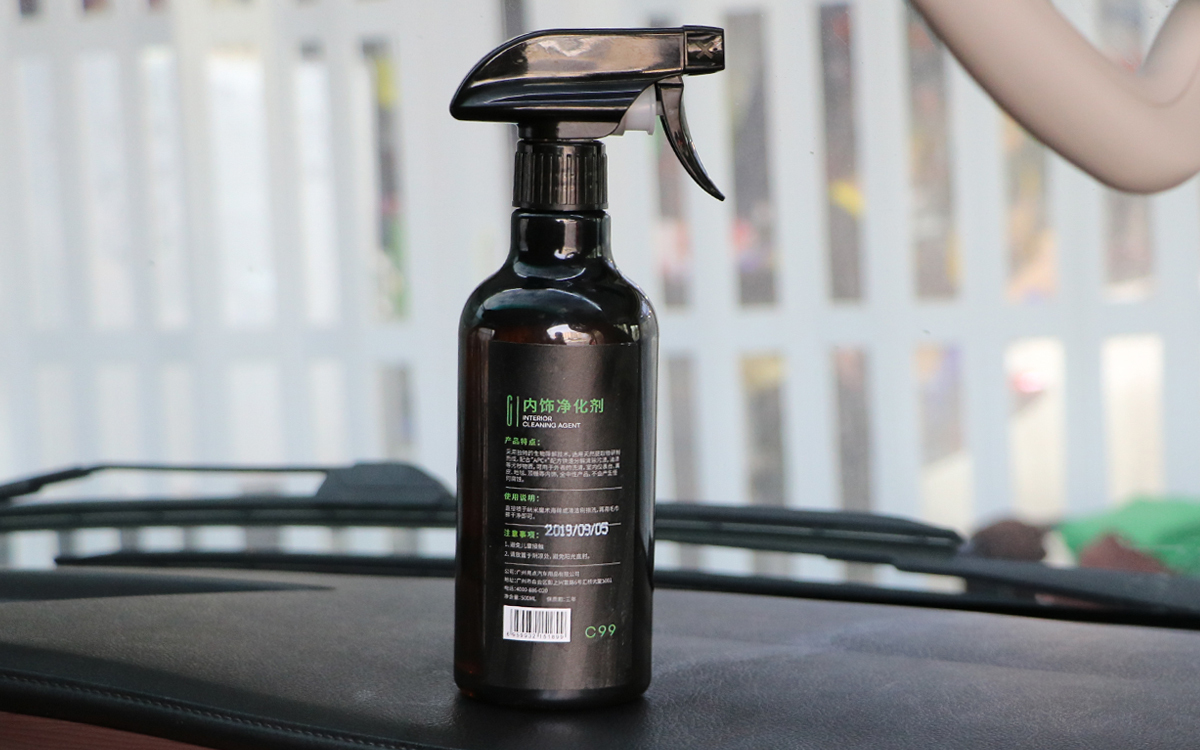
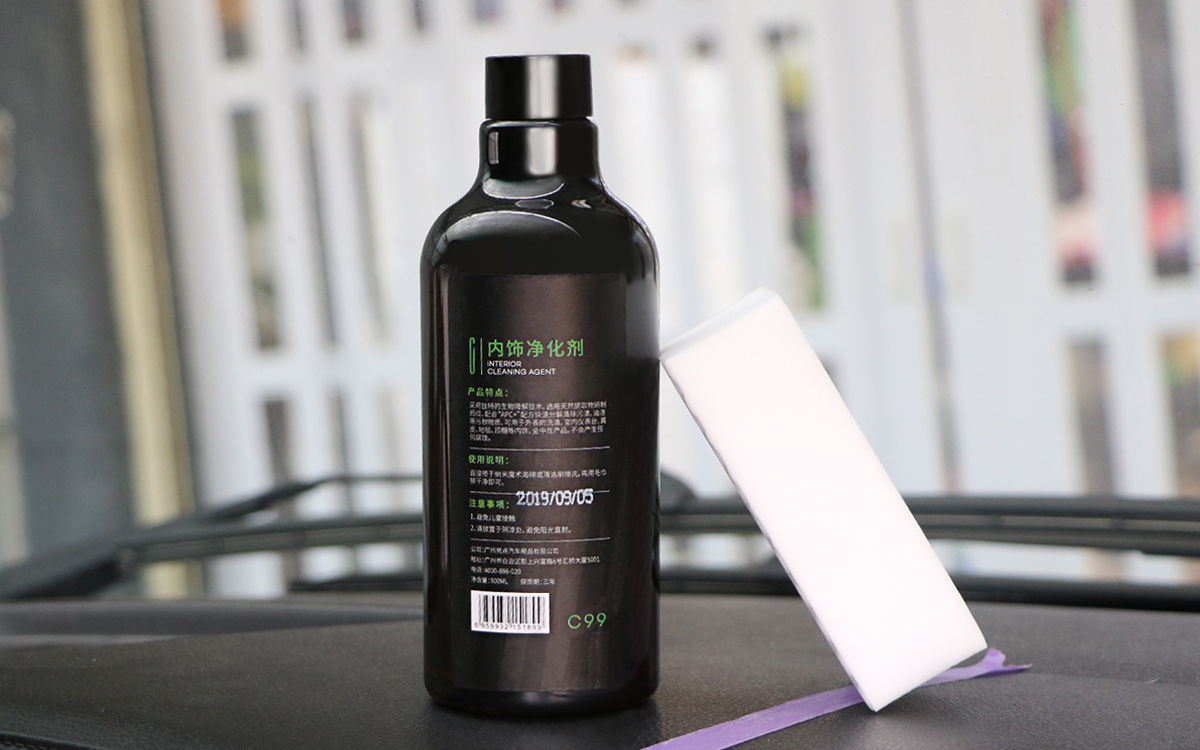
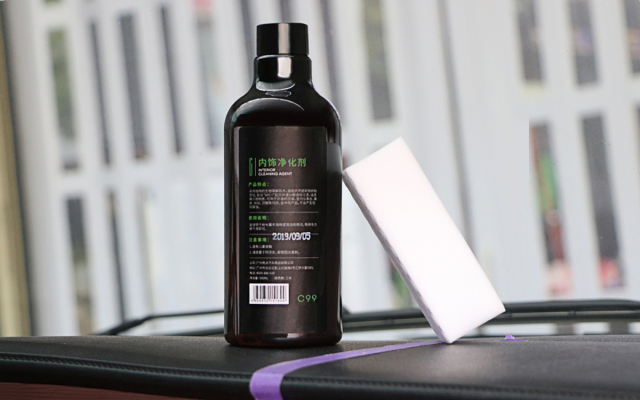
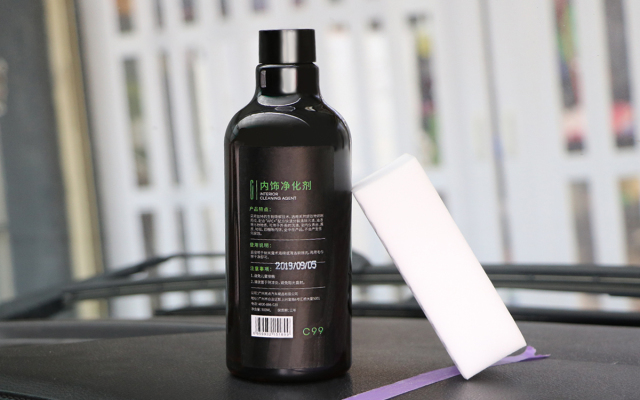
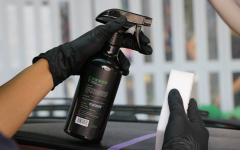
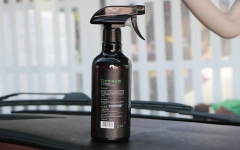
Interior leather collects a particular kind of dirt. Hand oil, sun cream, hair product, spilled coffee and make-up settle into the grain and the stitching, and a harsh all-purpose cleaner lifts them at the cost of the finish you are being paid to protect. This cleaning agent takes a different route: a concentrated liquid built on a cleaning essential oil, made for leather, synthetic leather, vinyl and the hard trim around them. Oily soiling and water-soluble marks come away with the same pass, which means one bottle on the cart covers the coffee spill on the centre console and the greasy shine on the door armrest. Spray it on the soil, give it a short dwell, wipe it off; heavy marks get a second application rather than a stronger chemical. That is the whole method, and it is short enough to run on every car in a pre-delivery or valet queue. Shops treat it as the interior half of a car detailing cleaner programme — the step that makes a used cabin look cared for before the photographs are taken. Distributors stock it because one container makes several bottles of working solution, and because it fills the interior slot in the range without adding another supplier to the list.
One liquid for oily and water-based soil — hand oil, sun cream and greasy armrests come off with the same product as coffee, soft drinks and make-up, so the cart carries one interior bottle instead of two.
Concentrated, so freight buys liquid and not water — one container dilutes into several spray bottles at the bench, and the saving shows up in shelf space, shipping weight and cost per car.
A dwell short enough for a queue — the soil loosens while the technician turns to the next towel, which is what makes the product usable on volume work rather than only on show cars.
Stubborn marks get another pass, not a stronger chemical — repeating the application is how the product is meant to be used, so the same bottle handles the neglected trade-in and the weekly fleet car.
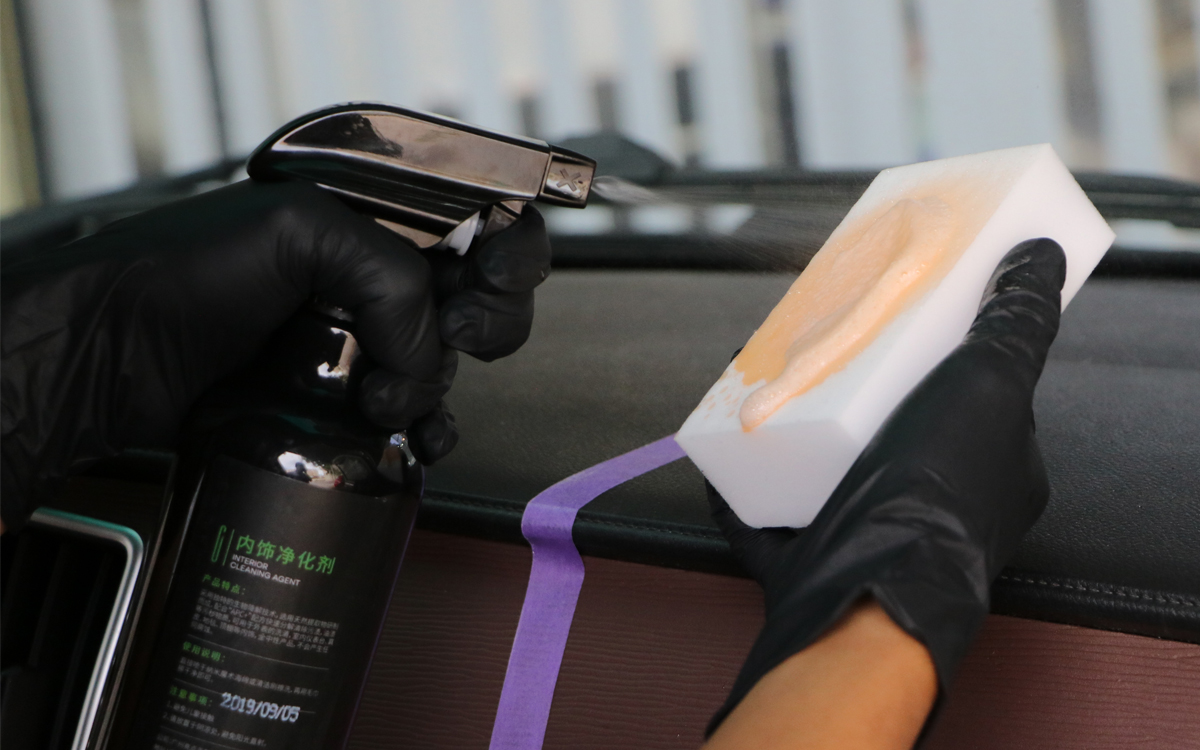
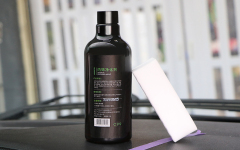
Fits the tools already on the cart — an acid-alkali resistant spray bottle, a clean towel and a soft brush cover most cabins; an interior gun or a nano sponge speeds up the bigger jobs.
A straightforward slot in a car care products range — it sits between the wash shampoo and the exterior dressing, giving a distributor an interior concentrate instead of a third exterior chemical.
Surfaces It Cleans
Finished automotive leather is a coated surface, and that coating is what this product is designed to clean without disturbing. Seats, bolsters, headrests and the stitched sections between them all respond to the same spray-and-wipe method. On perforated panels, spray onto the towel or a soft brush rather than straight into the holes, so the liquid stays on the surface where the soil is.
Synthetic leather and vinyl take the same treatment, and they are where the cleaner earns most of its keep in high-mileage cars. Door cards, armrests and the outer bolster of the driver's seat are usually the first places to go shiny and grey, because that is where hands and clothing land every day.
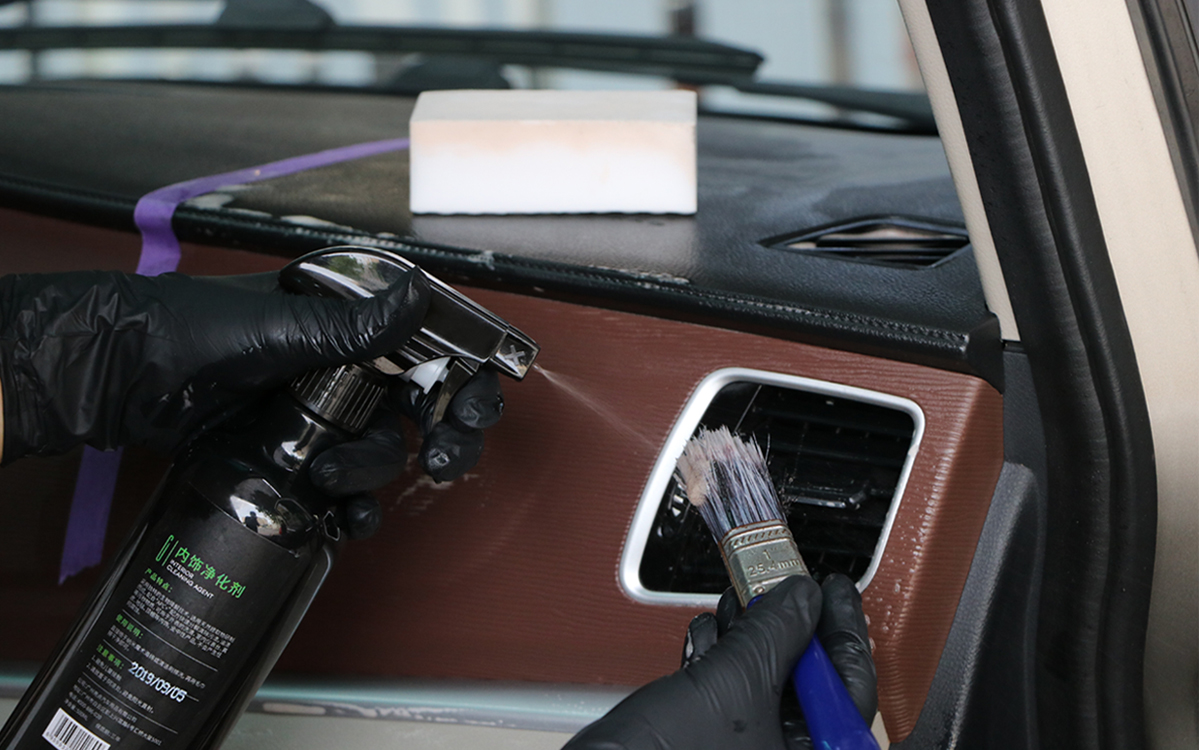
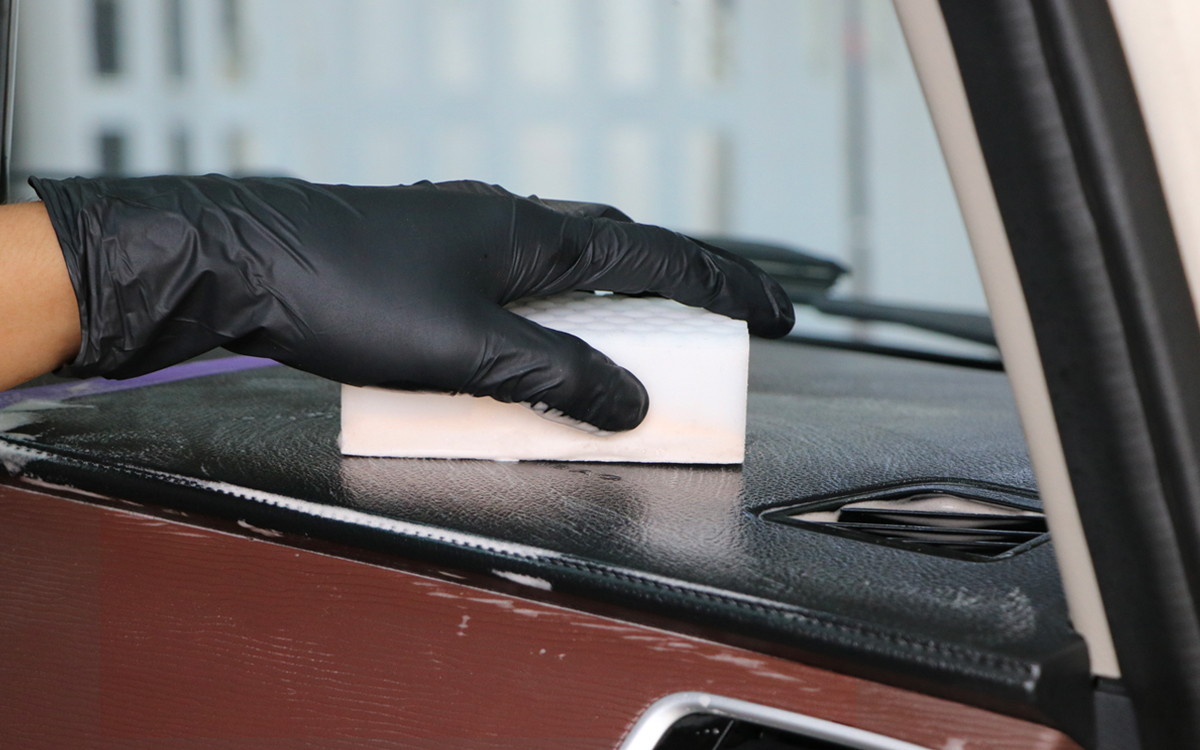
Hard interior trim is the third group. Dashboard tops, centre consoles, glovebox lids and door pulls are often textured, and texture holds soil in the pattern where a flat wipe slides over it. A soft interior brush works the cleaner into the grain and lifts it out; a nano magic sponge does the same job on smooth, piano-style panels.
Air vents collect a film of dust and oil that a dry cloth only pushes around. Spray the brush rather than the vent, work along the slats, and wipe the brush clean on a towel as you go.
Cloth seats, carpets and velour are a different job — ask your sales contact which interior product in the range is right for those surfaces before you put this one on them. For a shop running a car detailing cleaner line, that surface split is the useful part: one bottle covers leather, vinyl, plastic and vents, which is most of what a cabin is made of.
Dilution & Working Strength
- The lean end, around 1:10, for maintenance work — dust film, light hand marks and the weekly fleet cars where nothing is really dirty yet.
- The strong end, around 1:3, for neglected surfaces — body oil baked into a driver's bolster, sticky residue on an armrest, a trade-in that has not been cleaned in years.
- The middle of the range as a general default — sensible for a mixed queue where the technician does not want to think about the mix on every single car.
- Measure it, do not judge it by eye — a bay that dilutes a car wash cleaner by feel will find this one less forgiving; a marked bottle or a measuring jug keeps every car the same.
- Mix small and mix fresh — a bottle per shift is easier to control than a drum of working solution standing at the back of the bay.
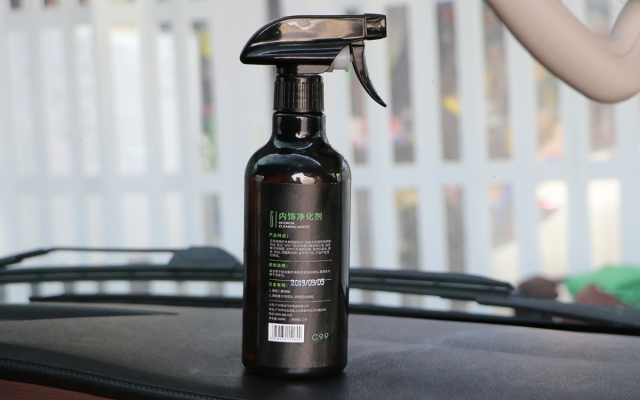
- Use an acid-alkali resistant spray bottle — the concentrate is designed to be held and sprayed from one, and a low-specification trigger with a soft seal is the usual failure point.
- Label every bottle — three clear liquids on one bench look identical, and a shop needs to know which car cleaner is in which bottle before it reaches a seat.
Step-by-Step Application
- Mix a fresh batch at the strength the surface needs and pour it into a labelled, acid-alkali resistant spray bottle.
- Work on a cool, shaded panel wherever you can — a dashboard that has been standing in the sun dries the liquid before it can lift anything.
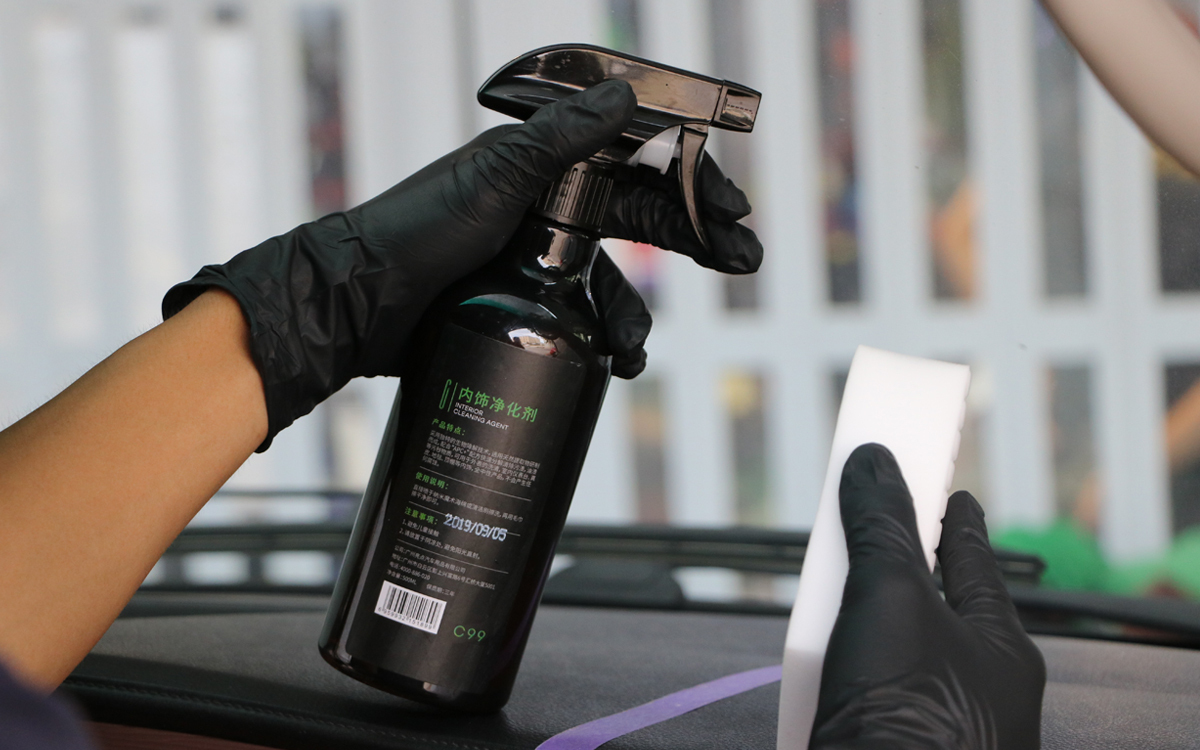
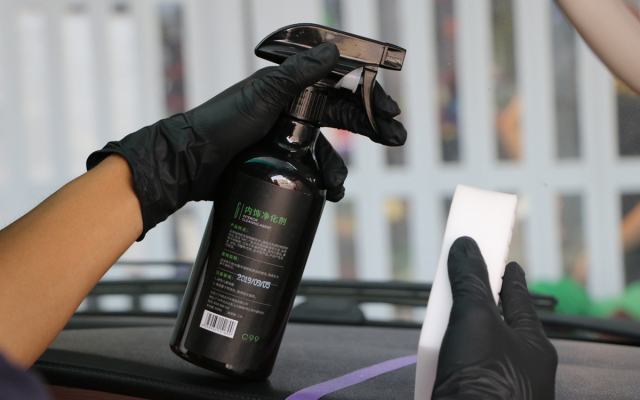
- Spray the car cleaner onto the soil in short bursts, or onto the towel or brush when you are working around perforations, seams or vents.
- Thirty seconds is a dwell, not a drying time.
- Wipe with a clean towel, turning to a dry face, until the surface is dry to the touch instead of wet and streaky.
- Repeat on anything left behind — a second application is the intended answer to a stubborn mark, not a stronger mix.
- Work textured plastic and vents with a soft brush, then wipe the brush clean on a towel so it does not carry soil to the next panel.
- Change towels as they load up; a wet, dirty towel moves soil back into the grain you have just cleaned.
Tools & Accessories
- Acid-alkali resistant spray bottle — the working container for the diluted solution; the concentrate is meant to live in one, and it is the cheapest part of the kit to get right.
- A stack of clean towels — removal is a towel job: one wet pass, one dry pass, and a fresh towel before the current one starts pushing soil around.
- Interior cleaning gun — for volume work on large surfaces such as door cards, seat backs and rear panels, it puts the solution down faster than a trigger bottle.
- Nano magic sponge — smooth, hard plastics and piano-style panels; it lifts the film without the abrasive cut of a general-purpose pad.
- Interior brush — textured dashboards, seat seams and vent slats, where the soil sits below the surface line.
- Multi-function detail brush — the small gaps: switch panels, seat rails, badge recesses and the edges of the centre console.
- Carpet brush — part of the same brush set for the fabric sections of a full interior job, where a different product in the range does the cleaning.
- The car care supplies most shops reorder — bottles, towels and brushes run out before the concentrate does, so it is worth holding them together on the same shelf.
Use & Care Notes
Treat this as a targeted spray rather than a whole-cabin treatment. A car wash cleaner is flooded over a surface and rinsed away; this one goes onto the soil in short bursts and comes off on a towel, which keeps liquid out of seams, switchgear, speaker grilles and the gap between the seat back and the cushion.
Test on a hidden area first — under the seat, or the back face of a bolster — on any vehicle with an unusual finish, an aftermarket leather cover or a very pale colour. Let the test area dry before you judge it.
Never let it dry on the surface. If a panel has been left too long and the residue has set, re-wet it with a damp towel and wipe again instead of scrubbing at it.
Keep the cap on the concentrate while you work and put the mixed bottle away closed; a bench with five open bottles is how the wrong liquid ends up on a seat. Store both out of direct sunlight and away from freezing, and keep them out of reach of anyone who is not using them.
Finally, do not over-wet leather. The cleaner works on the surface; soaking a perforated or stitched panel only pushes liquid where the towel cannot follow.
Specifications
| Property | Value |
|---|
| Model | C99 |
| Product type | Dilutable interior leather and trim cleaning agent |
| Cleaning base | Cleaning essential oil |
| Formula | No irritating chemicals, no bleaching agents |
| Effect on surfaces | Does not fade or damage the cleaned surface |
| Effect on skin | No damage to skin in normal use |
| Dilution | 1 part concentrate to 3-10 parts water |
| Dwell time | About 30 seconds before wiping |
| Application | Acid-alkali resistant spray bottle, wiped off with a towel |
| Stubborn marks | Repeat the application |
| Helper tools | Interior cleaning gun, nano magic sponge, interior brush, multi-function detail brush, carpet brush |
| Pack format | Confirmed for your market at quotation |
Working Samples & Label Proofing
- Send the brief with the request — the surfaces you clean, the soils you fight, your destination market and the sales channel the product will sit in.
- Ask your sales contact about sample availability and the scope of the sample; the size and any courier or sample charges are confirmed before dispatch, so both sides know what is being evaluated.
- Trial it against what you use now — run the sample and your current car care products on the same seat, at both ends of the dilution range, and write down what you see.
- Judge the result on what matters in your market: how it lifts the mark, how the surface looks and feels after drying, and whether the dwell time fits your labour rate.
- Approve and seal the sample — with the dilution, the towel or brush used and the result recorded, the approved sample becomes the reference that bulk production is checked against.
- Approve the packaging and label — bottle, closure, label copy, barcode, language and any market-specific wording, reviewed before a print run rather than after.
- Confirm the final pack before production — the approved sample, the approved artwork and the pack specification are the three references the order is measured against.
- Flag any documentation your market needs — test data, a safety data sheet or a composition statement — with the sample request, so it can be confirmed before you commit to a bulk order.
Ordering & Delivery
- In stock and fast shipping — our SURAINBOW lines are held in stock, and dispatch is scheduled against your confirmed order and the shipping method you choose.
- Quantities and pack — the pack size, case configuration and minimum order for your market are set out in the quotation; they depend on the item and the packaging direction you choose.
- Payment — orders are confirmed with a deposit and the balance is settled before dispatch; the accepted methods, currency and exact schedule are stated in the commercial offer.
- Documents — a safety data sheet, certificate of analysis, GHS label information, commercial invoice, packing list and customs paperwork can be prepared; confirm the set your market requires at quotation stage.
- Shipping methods — sea, air, rail and truck options, LCL and full containers, and DDP arrangements on the routes that support them; the right one depends on volume, destination and timing.
- Mixed orders — this concentrate travels with the rest of your car care supplies, so combine it with wash chemicals, glass care and dressings and have quantities, packing and documents quoted as one shipment.
- Wash-bay programmes — where an order also includes a car wash cleaner, glass water or a tyre dressing, list the items together so the pallet is planned as one interior-to-exterior package.
- Labels and local rules — label information can be reviewed against your destination market, but the importer confirms local registration, language and claims before the goods are sold on.
After-Sales & Batch Traceability
Every batch is linked to a record: the raw materials that went into it, the checks at filling, and a retained sample of the finished liquid. When you reorder, the sample from the batch you approved is still on file, so a question about colour, odour or viscosity can be answered by comparison rather than by memory.
If something is wrong on arrival, the timing matters. Report leaking bottles, shortages or carton damage within 7 days of receipt, and any quality concern within 30 days. Include the order or sample reference, the batch number, the affected quantity, photographs or video, and a short description of how the product was stored and used. With that in hand the batch can be compared against the approved reference and you get a position rather than a promise.
If you need a specific record for your own customers — a certificate of analysis, a traceability sheet or a document set for a tender — raise it during quotation so it is built into the order instead of being requested after dispatch.
As car cleaning products manufacturers, we would rather answer the awkward question before the pallet leaves than have you find the problem in your own warehouse. Put the record request into the quotation and it becomes part of the order.
Scale & Supply Capability
SURAINBOW is run by Guangzhou Liangdian Automotive Supplies Co., Ltd., a factory-trade operation set up in Guangzhou in 2010 and now 50 people strong. We take OEM and ODM work and our R&D team develops to your specification. Buyers in the Middle East, the United States, Southeast Asia, Europe, the UK, Russia, Africa and Australia already order from us.
FAQ
Can it be used on perforated or stitched leather seats?
Yes — those are exactly the panels this car detailing cleaner is meant for, but the method changes slightly. Spray onto the towel or a soft interior brush instead of straight into the perforations, so the liquid stays on the surface where the soil is. Work along the stitching with the brush rather than across it, wipe with a dry towel, and use the leaner end of the dilution range so nothing pools in the holes.
Can this cleaning agent be supplied under our own brand?
Yes. Private-label work covers our liquid car care products, from the existing formula through the bottle, closure, label and carton. Send the artwork, the language your market needs and the pack you want to use, and the label and packaging are reviewed with you before production. Where a buyer's own trademark appears on the artwork, authorisation is requested before the run is scheduled.
How do we know a reorder will match the first delivery?
The model reference on the label and in the batch record ties a reorder to the same formula, and the approved sample from your first order is retained for comparison. As car cleaning products manufacturers we keep the specification, the approved artwork and the retained sample together, so a repeat order is checked against the version you signed off rather than against a description.
Does it leave a residue behind?
Not if it is removed properly. The towel does the work: one pass to lift the loosened soil, a second with a dry face to take the surface to dry. Change towels as they load up, because a wet towel pushes soil and residue back into the grain. Clean towels are the one item of car care supplies that no interior job should run short of.
Is it only for detailing studios, or can a wash bay use it too?
A wash bay can use it as an interior step on every car that comes through, and many do — it is quicker than a full interior valet because there is no rinsing stage. Use the leaner mix for the volume cars and keep the stronger mix for the ones that need it. It does not replace the car wash cleaner used on the exterior; it is the interior product that goes with it.
Is it hard on hands over a full shift?
The formula carries no irritating chemicals and no bleaching agents, and it does not damage skin in normal use, which is why a technician can work with it all day. Gloves are still a sensible habit with any chemical on a busy bench, and a labelled bottle keeps the working solution where it belongs. If someone on the team has sensitive skin, keep a pair of gloves with this car cleaner and use them for the stronger mix.