Product Overview
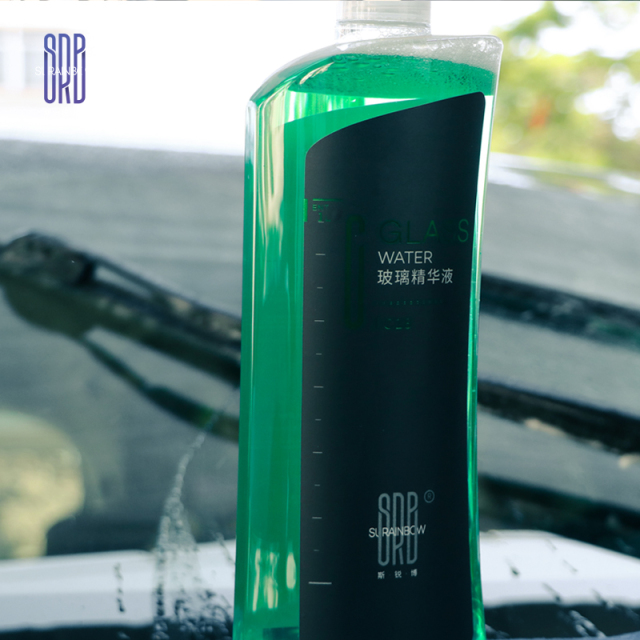
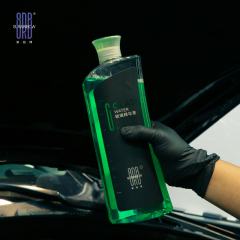
No.C18 is a windscreen glass water built for the wash bay rather than the kitchen window — the glass step in a range that car wash soap suppliers build around shampoo and foam. It is a car wash cleaner formulated with ammonia, which is what gives it its speed on the soils a car actually collects: road grime, insect residue, smoke film on the inside of the screen and the hand marks left behind after a valet. Within the wash sequence it belongs to the glass stage, after the shampoo and rinse and before the final towel-off, which is why it is stocked with the car wash shampoo and the rest of the wash chemicals rather than with the polishes. Two working routes are documented — a wiper-kettle fill for volume and a sponge, rinse and dry pass for a hand finish — and both are set out step by step further down. What this bottle does not do is strip baked-on traffic film or polish out etched water spots; those are different jobs, and the sections below make the line between them clear.
Surface Cautions & Limits
Ammonia is what gives this glass water its speed, and it is also why a filmed screen deserves a test first. Aftermarket window film and some glass coatings do not take kindly to ammonia-based cleaners, so run a patch in an inconspicuous corner and check it before the bay adopts the product for tinted or coated cars. If you are not sure what has been applied to a customer's screen, ask before the reservoir is filled — it is the one thing car cleaning products manufacturers cannot tell you from the label.
Chrome, mirror housings and brightwork are named on the formula, and a car detailing cleaner is expected to handle all three, but mirror caps are often plastic or painted on modern cars — keep the liquid on the glass and wipe runs off the surrounding parts before they dry.
The bottle has edges as well. Baked-on traffic oil film, the grey haze that creeps back a day after cleaning, is a degreaser job rather than a glass water job, and etched water spots or mineral rings need a polishing step. Working harder with more glass water only buys more passes and more towels. Where a shop stocks the full car care supplies range, keep this bottle and the oil-film degreaser physically apart on the shelf, because a mix-up puts the aggressive product into a reservoir that should carry the mild one.
Mixing is the last thing to pin down. Reservoir size, water supply and soil load vary from one bay to the next, so there is no single ratio that suits everyone: agree a mix with your sales contact, write it into the bay procedure and keep it fixed so two shifts finish the screen the same way. And do not decant it into an unlabelled bottle that has held car shampoo — the next person to pick it up will use it on the wrong surface.
Two Wash-Bay Application Routes
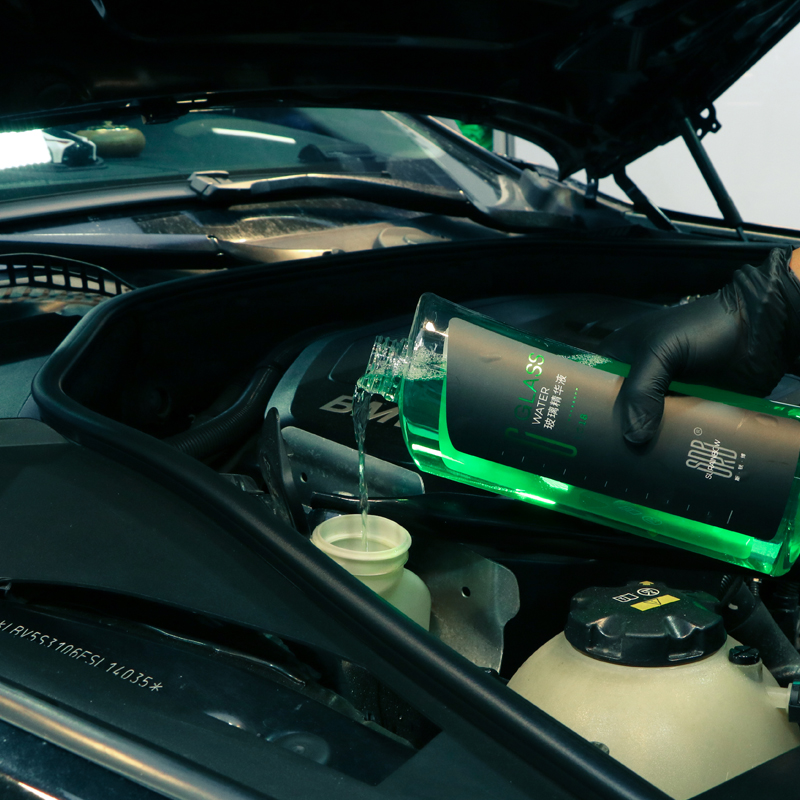
- Wiper-kettle route: open the wiper kettle and fill it with glass water.
- Top the kettle up with water to the mix your bay uses, then close it.
- Start the wipers and washers and let the blades carry the liquid across the screen; a short cycle is normally enough for a lightly soiled car.
- Sponge route: pour the glass water over a wet sponge until the face is charged but not dripping.
- Sponge the windows down, starting at the top of the screen and working downwards so the dirty water runs away from the clean glass.
- Rinse the windows out with clean water to carry the loosened soil off the glass.
- Wipe with a dry cloth, finishing with a second dry section so the screen is left clear rather than smeared.
Applications & Surfaces
- Express wash lanes — A kettle top-up between cars is often all the time there is; the screen is finished before the car reaches towel-off and the driver pulls away through clear glass.
- Full-service wash and valeting bays — Sponge and rinse the outside of the screen while the interior team works the inside, so one bottle covers both sides of the glass on the same car.
- Dealership pre-delivery and handover — A buyer looks through the windscreen before they look at anything else, and a screen free of film and hand marks is part of that first impression.
- Rental, fleet and taxi turnaround — Smoke film and finger marks from the previous driver come off between hires, which matters on vehicles that change hands several times a week.
- Mobile detailing vans — One bottle covers the whole glass set: windscreen, side and rear glass, mirror glass and chrome trim, so a car detailing cleaner does not need a second kit rolling around the van.
- Showroom and forecourt cars — Dust, fingerprints and lot film come off glass, mirrors and brightwork before a customer walks the line.
- Buyers comparing wash-chemical suppliers — Shops and importers shortlisting car wash soap suppliers for shampoo, foam and degreasers can put this glass water on the same list and keep the range coherent.
- Ammonia-based cleaning speed — The formula is built on ammonia, so it shifts the greasy, smeary soils that gather on a used screen — smoke film and hand oil inside, exhaust and road film outside, insect residue along the leading edge — quickly enough to keep a busy lane moving.
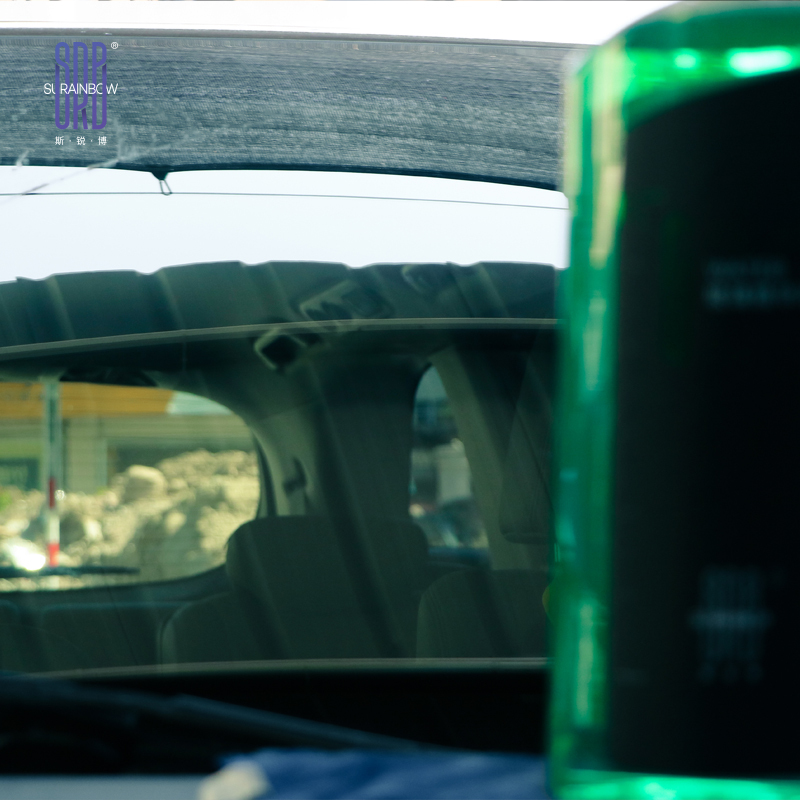
- A finish that does not streak — Cleaning is one thing; leaving nothing behind is what the driver notices. The glass is meant to come up clear without a polishing pass afterwards, which saves a step at towel-off and a complaint at handover.
- One bottle, two working routes — The same liquid fills a washer reservoir for volume work and charges a sponge for a hand finish, so a shop does not have to stock a separate spray bottle and a separate washer fluid for the same screen.
- All-weather use — It is an all-weather formula and is used on glass, chrome and mirrors through the year; for markets with hard winters, the mix your reservoirs need is confirmed with your sales contact before the season starts.
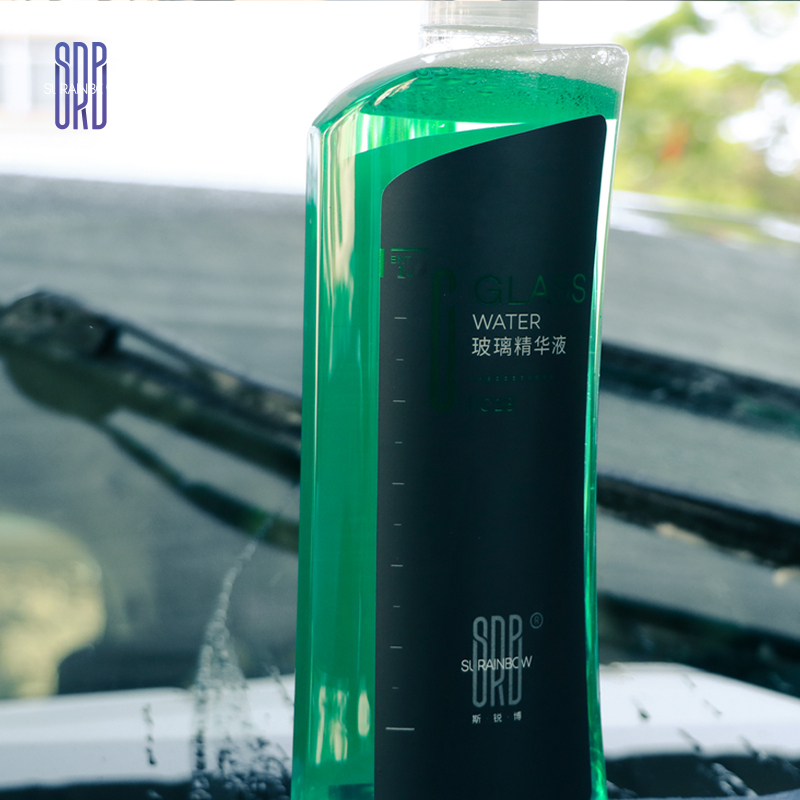
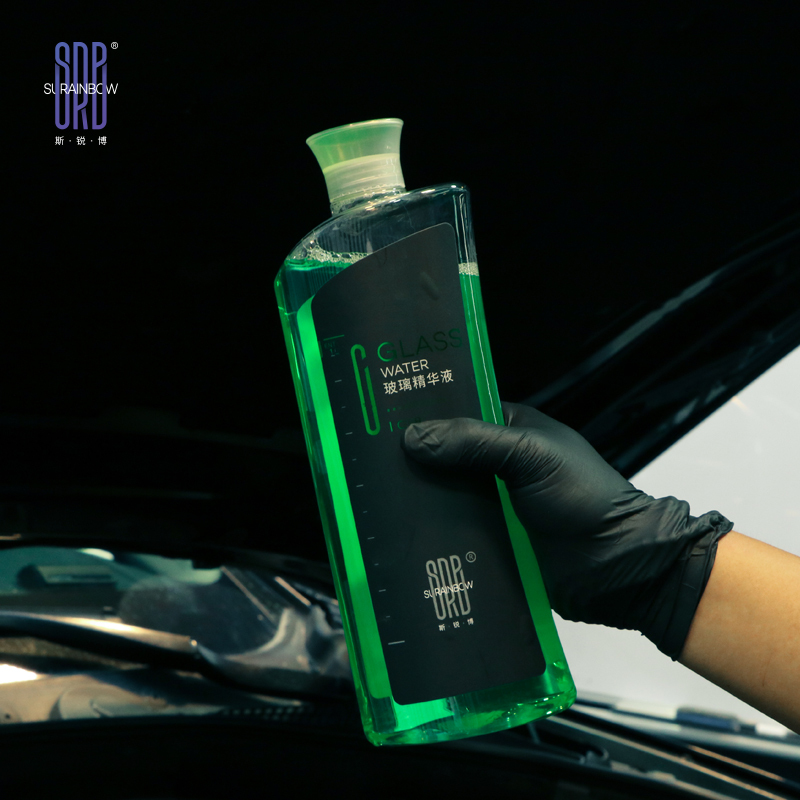
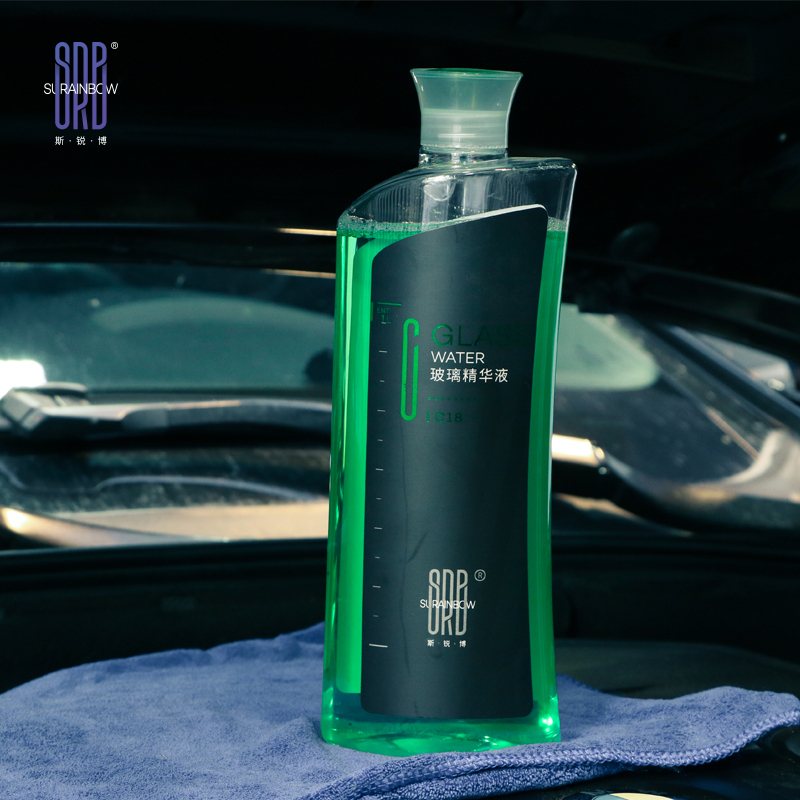
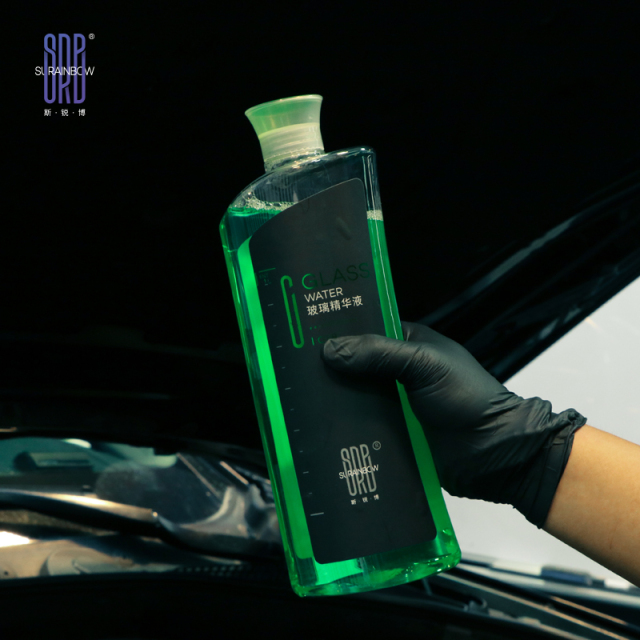
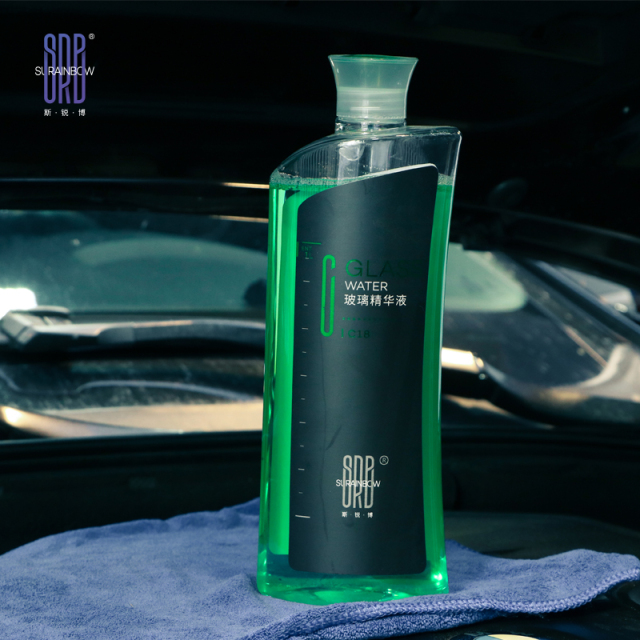
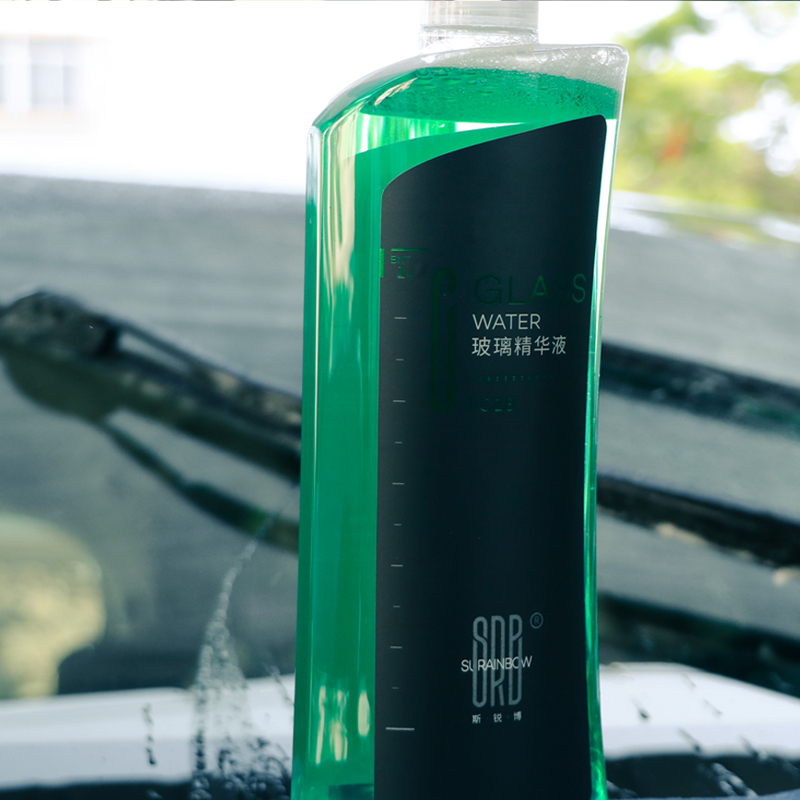
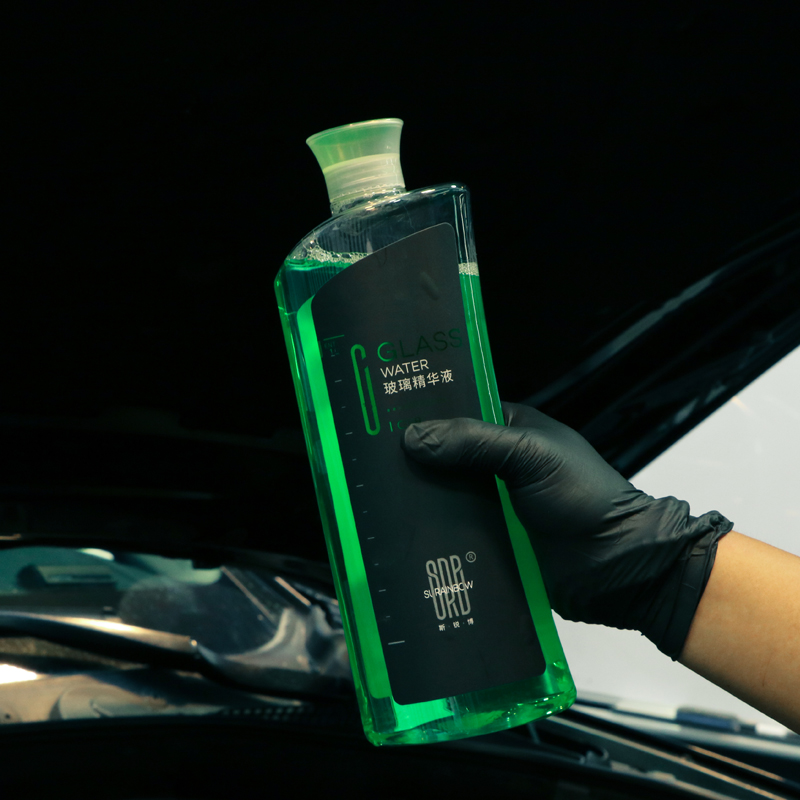
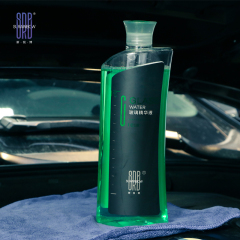
- A bottle a bay can work with — A clear body shows how much is left, the black front label identifies it at arm's length on a shelf of similar bottles, and the clear cap re-seals cleanly between cars.
- Runs on the tools already in the bay — Reservoir, wet sponge, hose and drying towel are the whole kit, so no extra car care supplies have to be bought or found space for before the product can be used.
- Part of a complete car care products range — Order it alongside the car shampoo, wax and interior chemicals instead of sourcing the glass step separately, and keep one supplier conversation for the whole wash line.
- A glass line for wash-chemical buyers — The kind of item that sits naturally on the same order as the car wash shampoo and foam, so the glass step arrives from the same source as the rest of the wash.
Specifications
| Property | Value |
|---|
| Product name | Car wash front windscreen glass cleaner |
| Item number | No.C18 |
| Product type | Car wash cleaner for glass |
| Formula | Ammonia-based |
| Appearance | Translucent green liquid |
| Bottle | Clear rectangular bottle, black front label, clear cap |
| Range | Car wash shampoo line |
| Category | Car care supplies — glass care |
| Surfaces | Glass, chrome and mirrors |
| Soils handled | Road grime, light road oil, insects, smoke film, hand marks |
| Application methods | Wiper-kettle fill; sponge, rinse and dry cloth |
| Weather | All-weather formula |
Packaging, Labelling & Carton Packing
- Fix the pack first: bottle, closure and fill size for your market, confirmed against the quantity you plan to order before any artwork is commissioned — car wash soap suppliers who settle the bottle before the artwork save themselves a reprint.
- Send the label copy: your brand artwork, label language, barcode data and the claims you intend to make, so they can be reviewed together rather than in pieces.
- Approve the proof: we issue a packaging proof showing the label, carton and shipping marks, and production follows the version you sign off rather than the original file. As car cleaning products manufacturers, we keep that approved proof on file as the reference for every reprint.
- Set the carton: pack configuration, carton specification and shipping marks, checked item by item when the order mixes several products, as it does when car shampoo, wax and glass water ship together.
- Pack for the voyage: closures and seals checked before cartoning and bottles packed so they arrive sound after sea freight — ask us for the current carton configuration for your pack size.
- Label for the destination: labels on car care products have to carry the language, claims and barcode the market expects, and the importer or brand owner confirms the final wording before print.
Samples, Batch Records & After-Sales
A sample before bulk is the cheapest way to settle a question about a car wash cleaner. Send the product you are considering, the surfaces it will be used on, your destination market and the pack you have in mind, and the sample scope — including any applicable sample or courier charges — is confirmed with you before dispatch. Test it on your own cars: check the colour and clarity against the approved appearance, run it through the reservoir you actually use, and judge the finish on the interior glass, where smoke film shows worst. Once you sign a sample off, it can be sealed as the bulk acceptance reference, and it is that sealed sample rather than a photograph that later batches are compared against. Production records follow the same logic. Batch code, raw-material traceability, inspection records and retained samples are kept for later review; the exact record set depends on the product and on what is agreed for the order, so say at quotation if you need a particular document, a defined retention period or a certificate of analysis. Colour and separation are the two things to watch in a liquid like this — compare a questionable batch with the sealed sample and with the storage conditions it has seen before drawing conclusions. After delivery, report packaging, leakage or shortage issues within 7 days of receipt, and product-quality concerns within 30 days. Include the order or sample reference, the batch number, the affected quantity, clear photos or video, and a description of how the product was stored and used. That package of information is what makes a review possible instead of a round of questions.
Ordering & Delivery
| Property | Value |
|---|
| Stock | In stock and fast shipping |
| Pack and fill size | Confirmed against your market, label plan and quantity |
| Minimum order quantity | Confirmed at quotation, by pack and label scope |
| Lead time | Confirmed against quantity, packaging and destination |
| Deposit and balance payment | Method, currency and schedule set out in the written offer |
| Shipping methods | Courier (DHL, UPS, FedEx), LCL, 20FT, 40GP, 40HQ, sea, air, rail and truck DDP |
| Export documents | MSDS/SDS, CoA, GHS label information, commercial invoice, packing list and customs documents |
| Trademark authorization | Required where buyer-owned artwork is used |
| Destination compliance | Label language, claims and registration confirmed by the importer |
Scale & Supply Capability
SURAINBOW is run by Guangzhou Liangdian Automotive Supplies Co., Ltd., a factory-trade operation set up in Guangzhou in 2010 and now 50 people strong. Sixteen years in car care have given us a one-stop supply position: our own SURAINBOW lines are held in stock for fast shipping, and an associate factory with modern production equipment and an established quality management system keeps replenishment moving. We take OEM and ODM work and our R&D team develops to your specification. Buyers in the Middle East, the United States, Southeast Asia, Europe, the UK, Russia, Africa and Australia already order from us.
FAQ
How is this different from a household glass cleaner?
Household sprays are built around dust, kitchen grease and fingerprints. A car detailing cleaner has a different list to deal with: insect residue and road film on the outside of the screen, exhaust and smoke film on the inside, and the plasticiser haze that collects on interior glass over time. That is why this one is formulated with ammonia and sold as glass water for the wash bay, with a mix you can set for a reservoir rather than a single ready-to-use trigger bottle.
Will the ammonia smell be a problem when we clean interior glass?
The formula is ammonia-based, so the smell is part of the product. Clean interior glass with the doors open or the bay ventilated, load a cloth or sponge rather than spraying near dashboards and door electrics, and keep the bottle closed between cars. On a hot day, work one screen at a time so the operator is not leaning into a closed cabin for longer than necessary.
Can we use it on vans, trucks and bus screens, not just cars?
Yes. The soil list and the finish are the same whatever the vehicle; what changes is the size of the screen and the size of the reservoir. Large fleets usually run the kettle route for the volume work and keep the sponge and rinse method for tall or steeply raked screens where a reservoir spray does not reach evenly.
Does the finish hold up through a hot afternoon or a cold snap?
The product is an all-weather formula, and the way it is worked matters as much as the formula. In a hot bay, do one screen at a time and wipe it dry before the liquid flashes off, otherwise the last pass drags dried residue across the glass. In markets with hard winters, confirm with your sales contact what mix your reservoirs need before the season, and keep stock out of freezing conditions in your own warehouse.
Can it be used as a quick wipe-down between full washes?
It can. Charge a cloth or sponge lightly, wipe the glass, then buff with a dry section — the same liquid at a much smaller dose. On a dusty forecourt car, rinse or wipe the loose dust off first so grit is not dragged across the screen, and leave the full reservoir method for the wash itself.